Field Notes – Backcountry Hut or Detox Facility?

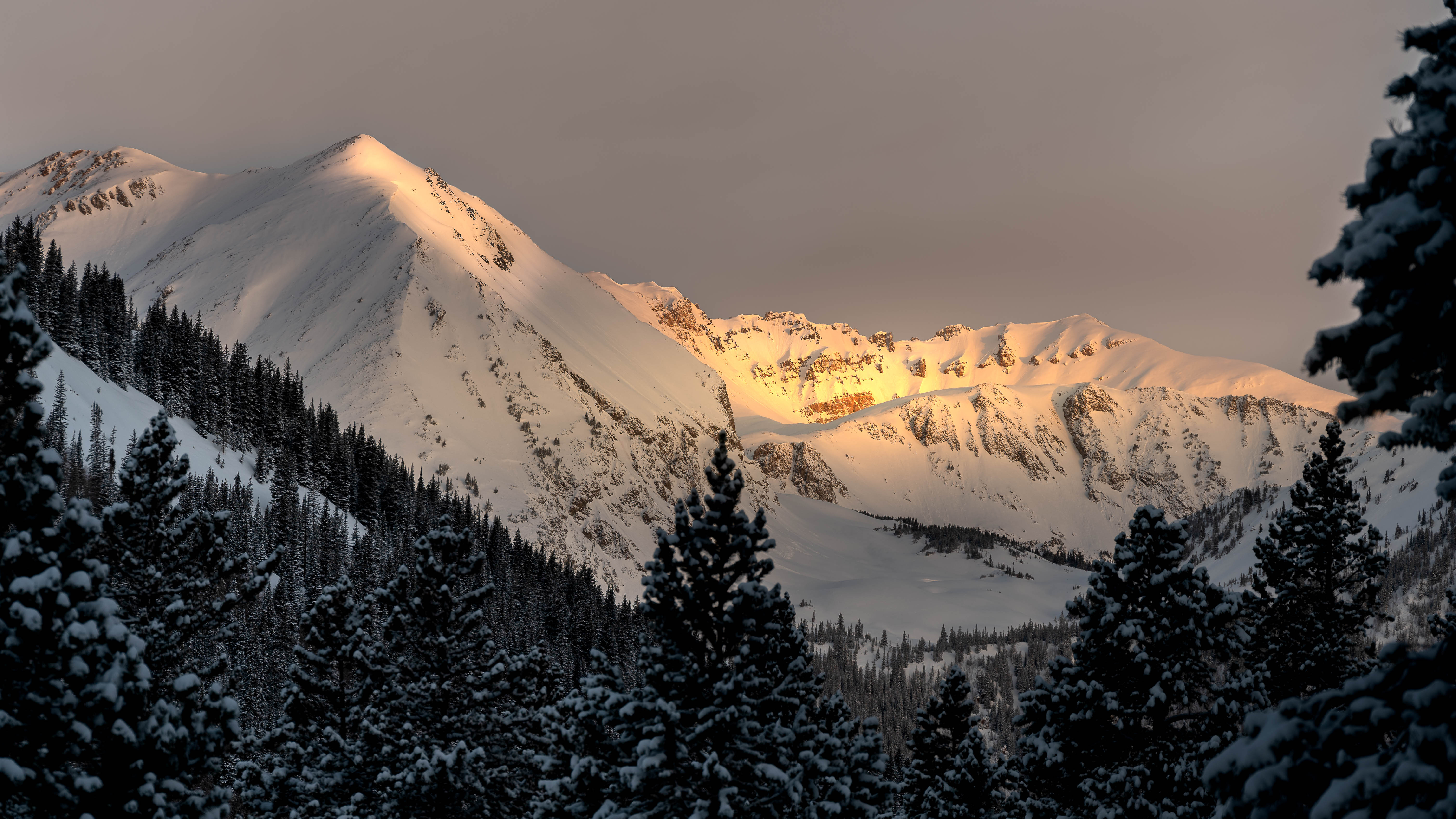
My wife and I, along with a couple of friends spent this past week up at one of the winter backcountry huts here in Colorado. The huts are always rustic and simple, yet have the basic accoutrements to make life comfortable in the backcountry. There’s a wood stove and plenty of firewood for heat, typically a small propane stovetop for cooking, oftentimes they have some limited solar lighting, have platforms or bunks with a basic foam mattress for sleeping and for ultimate convenience, a pit toilet. Basically, being at a hut is a practice in relative simplicity. Most importantly, few, if any of the huts have internet or phone coverage.

Before the internet and social media were a “thing”, a hut trip was one of the low-tech ways of socially connecting with our friends. Two or three of us would come up with a trip idea, book the hut, then contact our individual networks of other friends to see who was interested. 

The trips were oftentimes physically demanding and downright exhausting for some, but everyone shared the same experience and was then tied together in some way. Under one roof, people from different backgrounds, educations, geographic locations and physical capabilities could be equals and those differences became assets and opportunities for expanding our network of friends. The hut became the common denominator where everyone could find common footing.

This trip was much the same. Though our friends were also our neighbors who we’d known for years, we had ample time without distraction to actually get to know each other a little better. We learned more about our families and how it came to be that we eventually crossed paths here in Colorado. We had time, the most valuable commodity in anyone’s life.

Pressing issues to be addressed while in the hut were occasionally putting another log on the fire, speculating on how much snow would fall that evening, discussing the latest books we’d read, exploring the origination and future of the Social Security Administration (and it’s benefits and of course), what podcasts everyone had been listening to and of course, what was next on the menu for that day. 

But hut life isn’t always so easy. Without the internet, we actually had to think and try to remember what actor played in whatever movie it was we were trying to think of. No instant gratification! The horror! Over the course of each day, one topic of discussion would lead to another and before we knew it, the number of rabbits being chased down holes became relentless. 

As we were packing our gear to leave the hut, one of our friends confessed that she had experienced some withdrawal symptoms from not having access to the internet. She said there were many times during our stay where she had a subconscious and even physical reaction to grab her phone to look at news headlines, look up a topic we were discussing or just surf the internet. She even commented that she didn’t really realize how addicted she’d become to having her phone at the ready.

I knew this “issue” was a reality for many people after having read a little about Internet Addiction Disorder (IAD) and News Addiction Syndrome in the past, but I was still surprised by the comment. Maybe my surprise was borne from my own strong personal reasons for going to a hut to escape those very things in the first place. I am certainly no Luddite, but I guess I still hold on to the romantic idea of getting to a place where I can be fully present with friends with as little electronic distraction as possible. 

If I’m honest, when we got back into cell coverage and my phone started spasming with alerts for missed calls and text messages, I felt disheartened that my respite from cyber connectivity was over. I did however have three and half more hours of driving ahead and intended to milk out every second of being “away”.  With that in mind, I even chose my antiquated iPod Nano to serve as our DJ for the drive instead of Spotify just to stay “disconnected” for a little while longer. When I was back home and had everything unpacked and I was properly showered up, only then would I check back in on the cyber world.

I always hope to return from any trip, domestic or abroad, big or small, with something tangible or positive to take forward. Sometimes it’s a new “backcountry” recipe that was implausibly created over a crude flame or maybe a newfound appreciation for a different culture. Sometimes it might be a small, offbeat comment someone makes along the way that will serve as a daily reminder of why I was in that place to begin with. This time it was indeed that offbeat comment.

Climb high, ski fast, pedal hard, live simply. 

Field Trip: Taos, New Mexico – A Photography Road Trip

Back in the 60s and 70s, my family would drive endlessly around the desert Southwest, sometimes enroute to Southern California to visit relatives. Though I probably didn’t realize it at the time, those trips were likely the gateway drug to my insatiable craving for road trips today. The white sands in New Mexico, Saguaro cactus and ghost towns in Arizona, cafes along Route 66, the beaches of Southern California…my youthful eyes and mind eagerly devoured these types of things.  

Today, there are of course a few differences. For instance, now I’m in the driver’s seat instead of the backseat and instead of packing a shoebox full of 8-tracks or cassette tapes, I’ll freshen up my Spotify library and podcast playlists. Those minor differences aside, the essence remains the same…a blank slate of possibilities, endless stories and potential adventures. 

Recently, needing to get out of the snow and cold for a few days, we took a little mini road trip to Santa Fe to visit friends. Santa Fe, and New Mexico in general, has always been our “go-to” when we need a mini reset and a little art inspiration. While there, our friends unexpectedly gifted me a set of film cameras, all of which were once used by his father. The camera that immediately caught my attention was a Kodak Retina IIIC Rangefinder. 

According to the serial numbers, it was manufactured circa 1957 by Kodak AG in Berlin, Germany. I love old cameras and to me that camera, working or not, was a piece of art. The Retina series of cameras was the vision of George Eastman and German camera designer, Dr. August Nagel (also co-founder of Zeiss). This collaboratively built camera was envisioned to be a competitor to the photographic icons of Leica, Voigtlander and Hasselblad and though it never attained the longstanding gravitas of those legacy names, the Retina was still considered a viable contender for the time. 

Upon returning to Colorado, I immediately began trying to figure out if the camera worked and if so, how to operate it. Not surprisingly, before I ever loaded the first roll of film, I knew I’d have to take it on a road trip, partly to pay homage to its history, but also to introduce it to a new life and make it a part of my perpetual longing for simple, analog ways. It seemed only natural we should go back to New Mexico to take the first photos with the camera, or at least try.

I’ve been around photography my entire life, early on from my father’s Agfa cameras and mysterious garage darkroom, to my first real camera, a 1980s Canon AE-1, and all the iterations thereafter up to my current Nikon Z digital systems. However, drifting back into film has planted a creative seed I haven’t had in quite some time. To that end, I ordered the necessary equipment to develop my own film at home as well as a 35mm film scanner. I know the full commitment would have been to set up my own darkroom and that idea certainly hasn’t been dismissed.

Our trip back down to Taos had all the elements of a classic road trip. What should have taken us four hours easily took us double that. We stopped at unassuming places along the way to take a photo, to explore, to dine at a local cafe and to learn a little history of places we’ve typically cruised through at highway speeds — slow and steady, taking in every detail.

We also experienced some dreadful weather in the form of ferocious winds and snow squalls which made travel challenging and unpredictable, the exact weather we were hoping to escape. Additionally, places we had hoped to visit were closed for cultural ceremonies or simply lack of employees. But in classic road trip fashion, closed doors and unanticipated roadblocks led to unexpected adventures and extraordinary discoveries. It was of course, “imperfectly perfect”. 

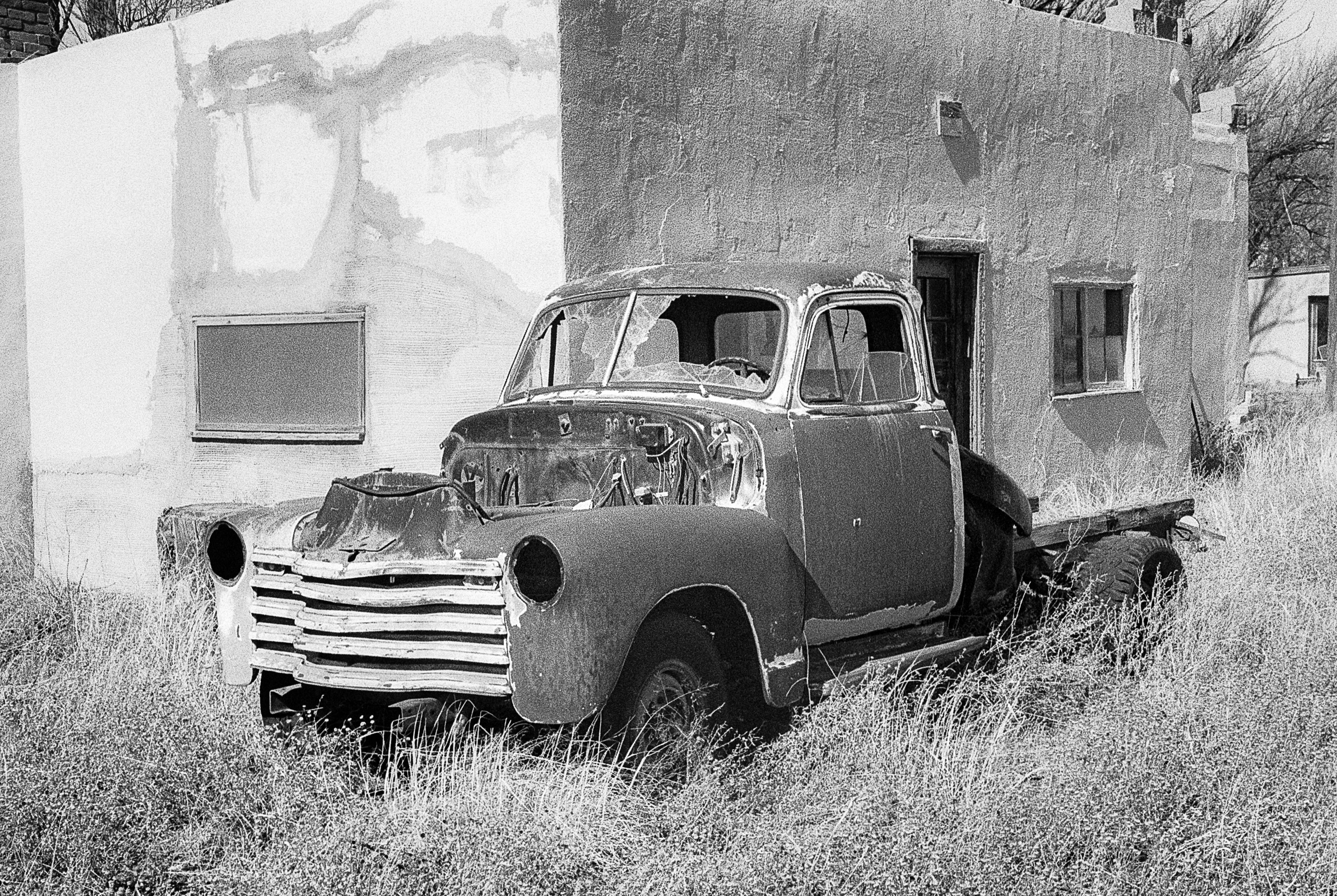
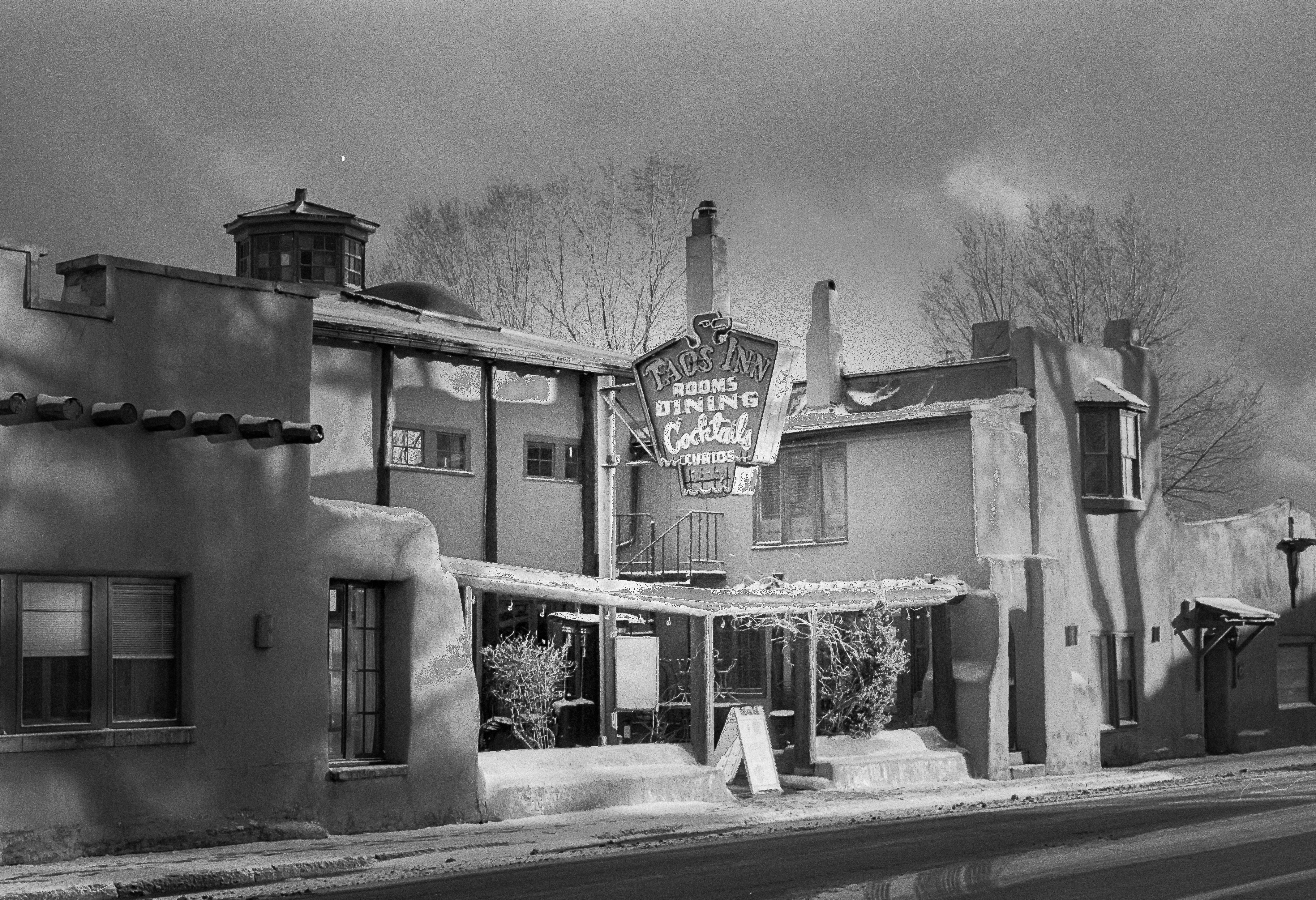
As for the film photography efforts, I’ll offer that it was as challenging as it was rewarding. Shifting back to the totally analog process from my familiar digital work flow took measured thought and deliberate patience, sometimes practiced in driving snow. Loading film or threading a cable release with frozen fingers was sometimes an ambitious effort. Interpreting an analog light meter, calculating exposure values, making aperture and shutter speed decisions without the convenience of chimping all forced me to slow down and thinkrethinkthen just cross my fingers before activating the shutter. Daunting and exhilarating. 

The photos themselves certainly can’t or won’t be considered earth-shattering or avant-garde in photography circles, but the amount of work I put into them gave me an appreciation for the process I rarely get from my digital work. No instant gratification, just learning something new, practicing patience, embracing the unexpected and anticipating the promise of what might be — the exact same elements I pursue when setting off on a classic American road trip.   

Climb high, ski fast, pedal hard, live simply.